


NO.84



- Last updated:2025-12-16
- Clicks on the following title, but browses this article fast
- Policies & Regulations Starting on January 1, 2026, Monthly Minimum Wage to be Increased to NT$29,500; Hourly Minimum Wage to be Increased to NT$196. Ministry of Labor Plans to Increase Maternity Benefit and Subsidy to NT$100,000 Per Child Supporting Employers and Workers, the Ministry of Labor's Integrated Employment Services Plan has Launched! Legal Rights Assistance Program for Workers Suffering from Occupational Accidents and Their Families Provides Strong Support for Vulnerable Workers
- News Outlook Minister of Labor Hung Sun-Han Meets with Delegation of US State Labor Officials 2025 National Occupational Safety and Health Awards Recognizes Outstanding Enterprises and Individuals
Starting on January 1, 2026, Monthly Minimum Wage to be Increased to NT$29,500; Hourly Minimum Wage to be Increased to NT$196.
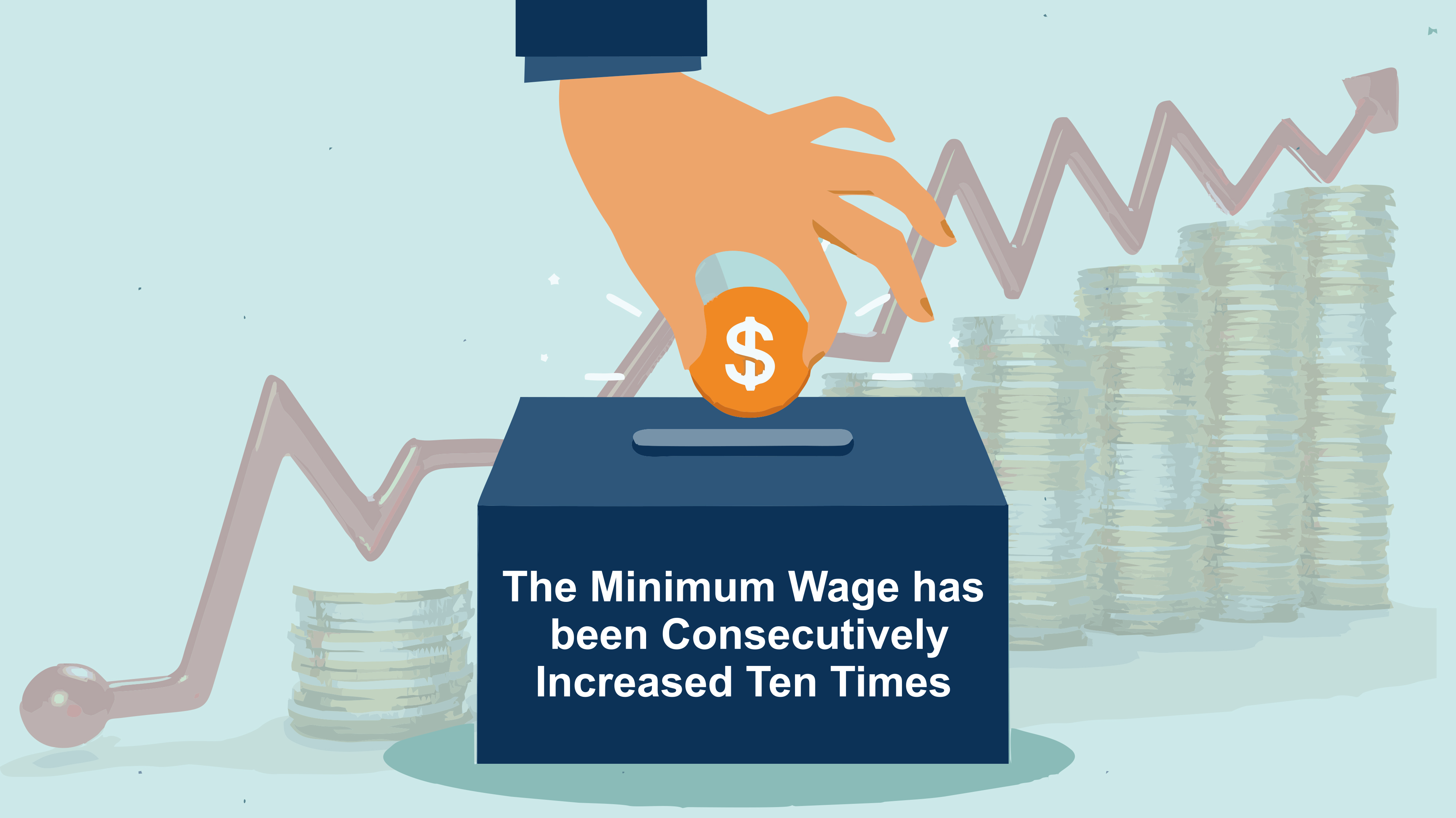
The Minimum Wage Deliberation Committee held a meeting on September 26. After discussions among labor and employer representatives, scholars and experts, and government, it was decided that the monthly minimum wage, effective from January 1, 2026, will be adjusted from NT$28,590 to NT$29,500, an increase of NT$910, or 3.18%. The hourly minimum wage will be adjusted in the same manner, increasing from NT$190 to NT$196.
Regarding the year-over-year increase in the consumer price index (CPI) at 1.76%, both labor and employer representatives of the committee reached a consensus that it should be accurately reflected to maintain the real purchasing power of marginal workers and serve as a reference for adjusting the minimum wage. However, on the subject of sharing the benefits of economic growth, employer representatives noted that international trade policies, such as exchange rates and US reciprocal tariffs, have brought changes to the domestic socio-economic situation and have impacted certain industries. At the same time, economic growth is driven by the semiconductor and high-tech sectors, while traditional manufacturing and the service industry continue to face many challenges. Employer representatives therefore recommended a modest adjustment to the minimum wage. Labor representatives pointed out that price increases are more impactful on low-income groups. Speaking on the changes in the international situation, such as exchange rates and US reciprocal tariffs, they said that since the government has launched a series of support programs to help impacted industries weather the short-term shocks, these changes should not impact this minimum wage adjustment. In the afternoon, experts and scholars representing the public interest proposed a compromise. The final adjustment rate was reached after several rounds of negotiations between labor and employer representatives, with the minister listening to the opinions of both sides and mediating.
Implementing the Minimum Wage Act and raising the minimum wage is one of the key tasks among President Lai Ching-te's National Project of Hope policy goals. This adjustment is estimated to benefit approximately 2.47 million workers, including about 2.08 million local workers. It also marks the 10th consecutive year of increases in the monthly salary since 2016, rising from NT$20,008 to NT$29,500, a total adjustment of 47.4%. The hourly wage increased over the same period from NT$120 to NT$196, a total adjustment of 63.3%.
In the future, the Ministry of Labor will continue to enhance its advocacy efforts to help businesses in legal compliance. For those violating minimum wage regulations, authorities will require operators to make improvements so as to protect workers' wage rights and interests.
Keywords: Minimum Wage, Minimum Wage Deliberation Committee, Consecutively Increased Ten Times
Ministry of Labor Plans to Increase Maternity Benefit and Subsidy to NT$100,000 Per Child

To address Taiwan's declining birth rate, the Ministry of Labor (MOL)—in coordination with the Executive Yuan's Measures that Counter Falling Fertility Rates—is introducing a program that will provide female citizens (including foreign spouses married to an ROC citizen and having acquired legal residency in the ROC) with social insurance maternity benefits plus a childbirth subsidy, for a total of NT$100,000 per child. The initiative will launch on January 1, 2026.
The MOL indicated that the policy target is for the government to provide support to families with children. Under the current Labor Insurance Act, insured female workers are entitled to two months of maternity benefits upon giving birth; in cases of plural births, the benefit is increased proportionately. To provide families with greater support in raising their children, the "maternity benefit and subsidy: NT$100,000 per child" program allows insured female workers to receive, in addition to the existing labor insurance maternity benefits, a childbirth subsidy funded separately by the government from the public budget—a total of NT$100,000 per birth. Those who receive a lower maternity benefit will be entitled to a correspondingly higher subsidy.
The MOL further indicated that this initiative aims to encourage childbirth among Taiwanese nationals. The subsidy targets female Taiwanese workers insured under labor insurance (including foreign spouses married to an ROC citizen and having acquired legal residency in the ROC) who apply for maternity benefits. It will be issued by the Bureau of Labor Insurance together with the maternity benefits, without requiring the insured person to file a separate application, making for a convenient and efficient government service.
Keywords: Labor Insurance Maternity Benefits, Expanded Maternity Benefit and Subsidy Program, Maternity Benefit and Subsidy: NT$100,000 Per Child
Supporting Employers and Workers, the Ministry of Labor's Integrated Employment Services Plan has Launched!
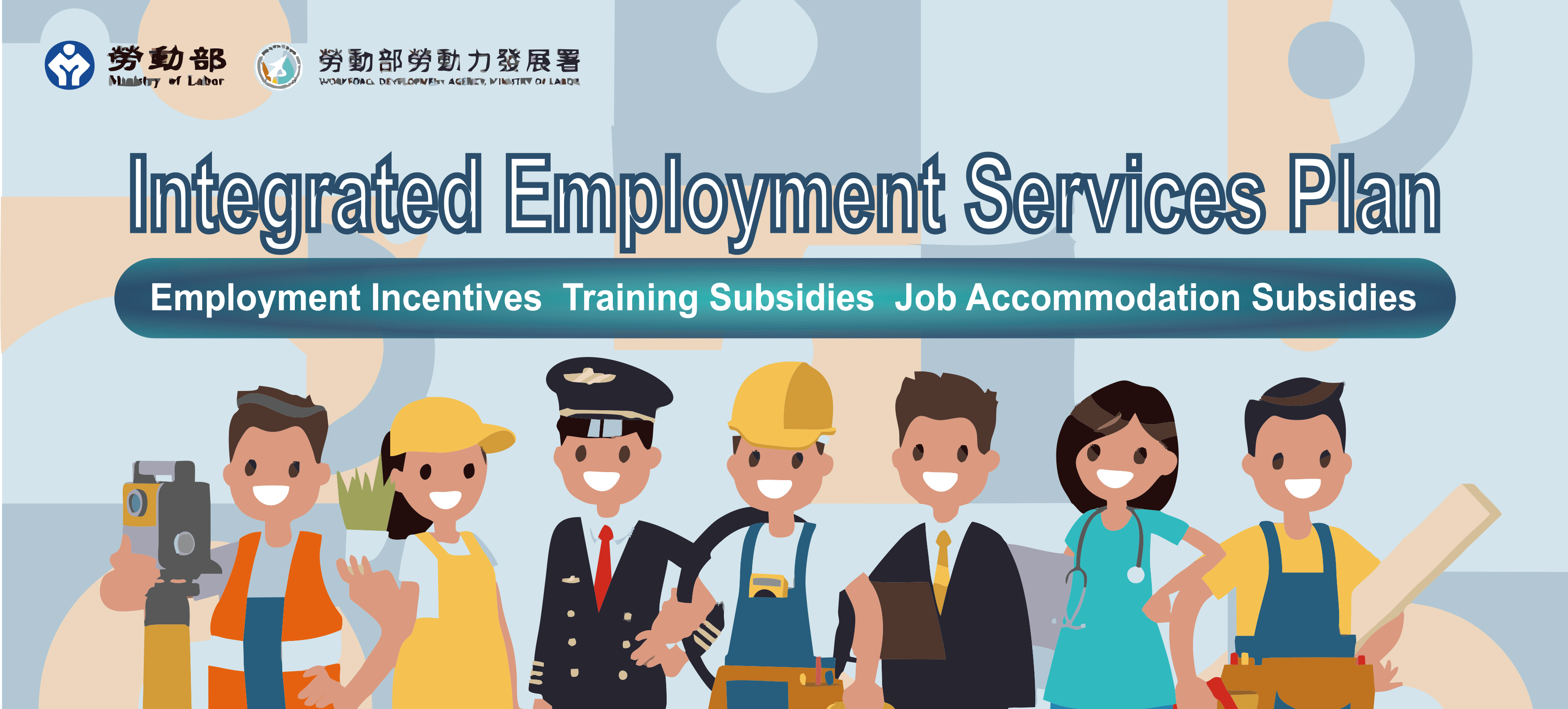
To address the challenges posed by changes in the international situation, the Ministry of Labor (MOL) is promoting the Integrated Employment Services Plan, which integrates employment incentives, on-the-job training, and job accommodation resources to encourage employers to hire unemployed workers from impacted industries. It also provides customized job matching and employment incentives for unemployed workers to help them find suitable jobs as quickly as possible.
Since April 2025, the MOL, through public employment service agencies, has proactively visited and showed support for businesses and workers, assessed the needs of unemployed individuals, and delivered customized job matchmaking services. Manufacturing industries, being heavily export-oriented, have been the hardest hit by the international situation. The program is therefore being implemented first for manufacturing sector workers who have lost jobs, with plans to make rolling adjustments to expand assistance to other affected groups.
Under the Integrated Employment Services Plan, public employment service agencies provide support for unemployed workers who have been jobless for 30 days or more and possess adequate skills. Agencies encourage employers to offer positions through employment incentives. Employers who hire recommended workers on a full-time, monthly-salary basis for at least 30 consecutive days can apply for an employment subsidy of NT$6,000 per worker per month, for a maximum of 6 months. For unemployed workers whose skills do not yet match available jobs, a hire-first, train-later model is used. Employers assign workplace mentors to provide the necessary on-the-job training and can receive a training subsidy of NT$12,000 per worker per month, for a maximum of 3 months. Each employer's annual cap for training subsidies is NT$1.8 million. Additionally, to address workplace adaptation needs, public employment service agencies will implement job accommodation measures and work with employers to eliminate workplace barriers. Employers can receive a subsidy of up to NT$100,000 per worker per year.
As long as employers register job vacancies with a public employment service agency, the agency will provide an integrated support package, enabling employers to quickly fill positions while substantially reducing initial onboarding costs. Employers are reminded that, during the subsidy period, they must maintain at least 90% of their original workforce size, and refrain from implementing reduced working hours. By supporting employers and backing labor, the program seeks to create more job opportunities for workers in impacted industries while helping industries maintain a stable workforce.
Keywords: On-the-job Training, Employment Incentives, Job Accommodation
Legal Rights Assistance Program for Workers Suffering from Occupational Accidents and Their Families Provides Strong Support for Vulnerable Workers

After an occupational accident occurs, affected workers often fall into financial hardship and face pressure in protecting their rights. "Pursuing responsibility for occupational accidents is not the sole burden of the injured worker." To address this, the Ministry of Labor (MOL) has launched the "Legal Rights Assistance Program for Workers Suffering from Occupational Accidents and Their Families," which offers comprehensive legal support starting immediately after the accident, including preliminary analysis of the accident's causes, professional lawyer consultations, representation in reconciliation and mediation sessions, and litigation assistance. This ensures that occupational accident workers and their families receive the compensation and damages they are entitled to.
Minister of Labor Hung Sun-Han pointed out that in practice, workers who suffer occupational accidents and their families frequently face three major inequalities after an accident: information asymmetry, power imbalances, and economic disadvantages. However, the basic legal consultation services currently provided by local governments are unable to meet the needs of complex occupational accident cases. Moreover, existing legal aid resources come with income eligibility requirements. Families that suddenly lose their primary earner after an occupational accident often cannot afford legal assistance fees. This results in low settlement amounts in fatal occupational accident cases, and employers, facing minimal liability, do not place sufficient emphasis on workplace safety. Additionally, migrant workers who suffer occupational accidents are frequently hampered by language barriers and insufficient familiarity with regulations, making it difficult for them to effectively assert their rights.
To address such difficulties, the assistance program provides the following support immediately after an occupational accident occurs:
I. Immediately provide workers who suffer occupational accidents and their families with a preliminary occupational accident inspection analysis report to speed up information acquisition and evidence preservation.
II. Offer dedicated lawyer consultations, representation in reconciliation and mediation services, and plan to include labor-management dispute arbitration procedures within the scope of legal assistance.
III. Relax legal aid eligibility requirements for workers who suffer severe injuries or death due to occupational accidents and their families, exempt them from income eligibility verification, and provide financial assistance for necessary costs in criminal proceedings as well as advance provisional seizure guarantee deposits for families of deceased workers.
IV. Provide interpretation services throughout the entire process for migrant workers who suffer occupational accidents, ensuring they can effectively assert their legal rights.
V. Promote legal rights education for both labor and management, and conduct training related to occupational accident affairs for relevant service personnel to strengthen overall professional service quality.
The MOL emphasizes that the purpose of this assistance program is not to encourage litigation, but to provide the strongest possible support to workers who suffer occupational accidents, thereby incentivizing employers to prioritize workplace safety and protection. The MOL will continue to enhance labor protection policies to ensure that workers receive the assistance they are entitled to following an occupational accident.
Keywords: Occupational Accidents, Services for Workers Suffering from Occupational Accidents, Occupational Accident Legal Assistance
Minister of Labor Hung Sun-Han Meets with Delegation of US State Labor Officials
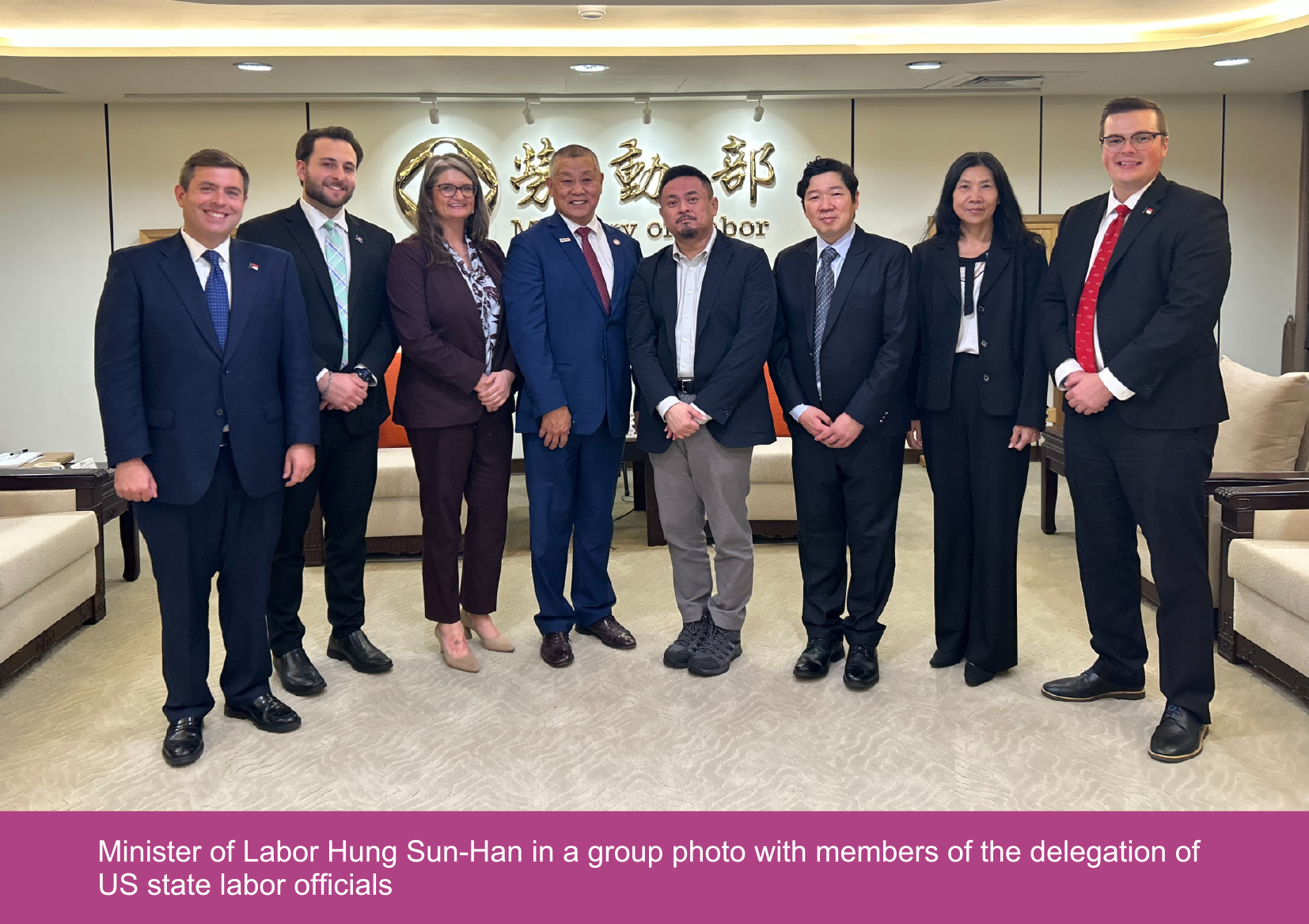
On the morning of November 3, 2025, Minister of Labor Hung Sun-Han received a five-member delegation of US state labor officials, including head or deputy head of labor department from Virginia, Montana, North Carolina, and North Dakota.
Taiwan's Ministry of Labor (MOL) has invited a delegation of US federal and state labor officials to visit Taiwan every two years since 2013 to deepen exchanges and interactions between Taiwan and US labor administrations.
During the delegation's visit, the MOL arranged a Taiwan-US labor affairs symposium, along with discussion sessions and exchanges on "the impact of emerging technologies on employment" and "vocational training and employment promotion." The itinerary also included visits to various operational units and affiliated agencies (organizations) of the MOL, as well as tours of diversified employment counseling organizations to help the delegation understand how Taiwan assists persons with disabilities and disadvantaged job seekers in obtaining local employment. The aim is to enable the US to gain a deeper understanding of the development and implementation outcomes of Taiwan's labor policies, while also further bolstering the Taiwan-US partnership in labor affairs.
Keywords: Delegation of US Federal and State Labor Officials, Taiwan-U.S. Labor Affairs, International Exchange
2025 National Occupational Safety and Health Awards Recognizes Outstanding Enterprises and Individuals
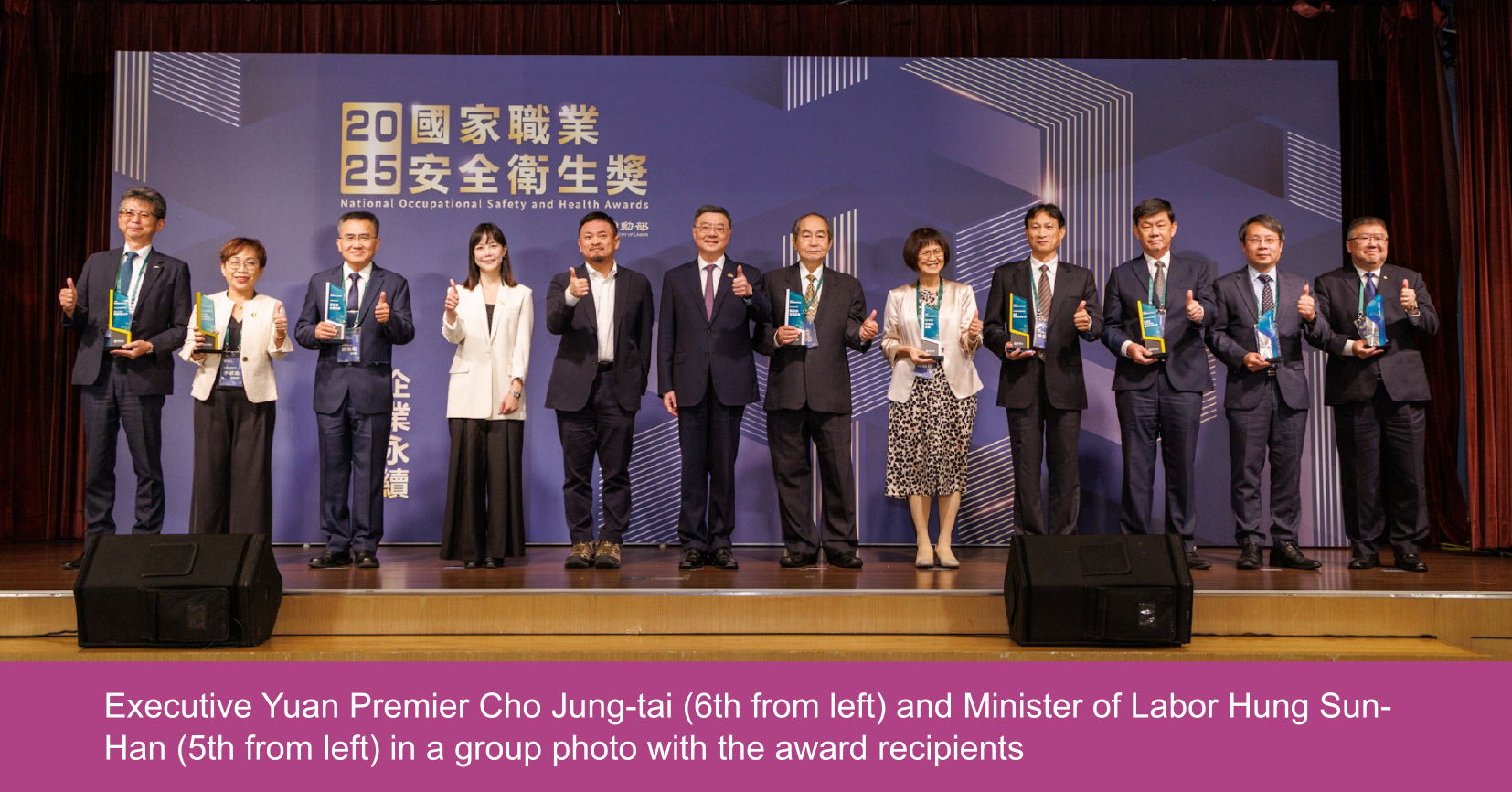
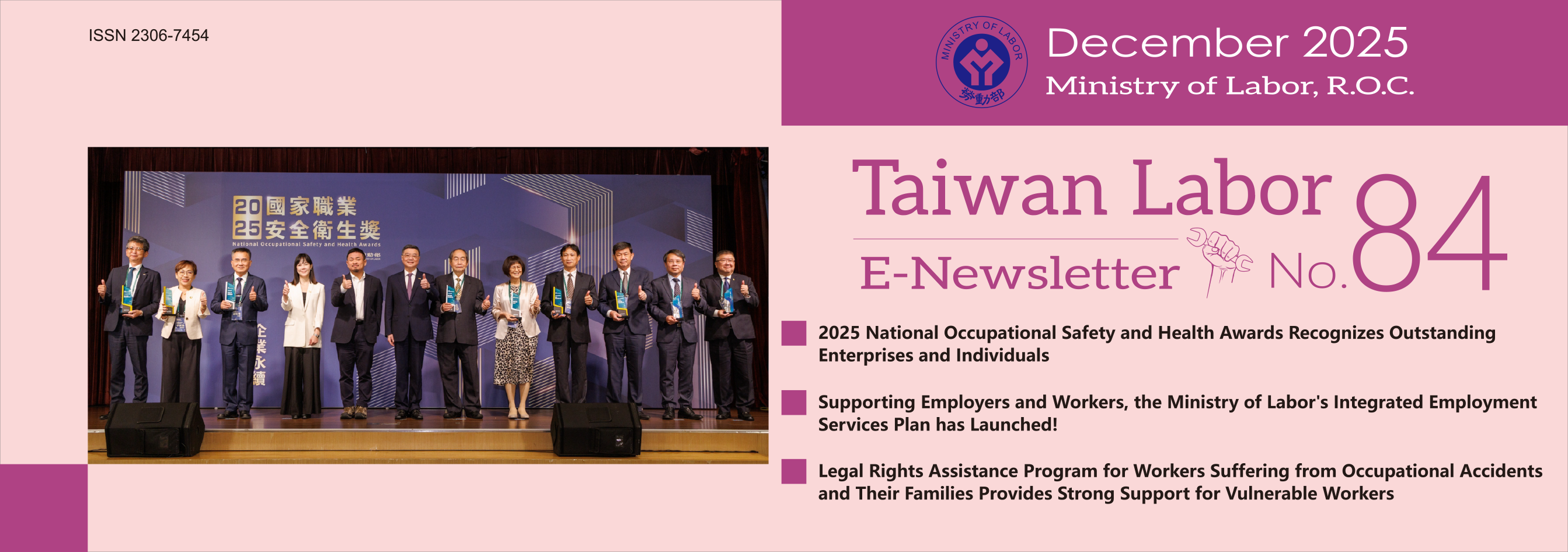
The "2025 National Occupational Safety and Health Awards" were presented on October 20, 2025, by Executive Yuan Premier Cho Jung-tai. The ceremony honored enterprises and individuals for long-term dedication and outstanding performance in creating safe and healthy workplaces; it also encouraged award recipients to show the way for other businesses in strengthening occupational safety culture and jointly building safer and healthier work environments.
Premier Cho pointed out that Taiwan's occupational accident rate per thousand workers has dropped from 2.953 in 2016 to 2.375 in 2024 (a 19.57% reduction), which is the result of the combined efforts of the government and private sector. The government will continue to foster a worker-friendly environment and safeguard the safety of both domestic and foreign workers.
Minister of Labor Hung Sun-Han stated that the Occupational Safety Accident Reduction Plan will be launched by the end of the year. Through strategies including accident prevention at the source, expanded regulatory coverage, cross-ministry collaboration, public-private partnerships, and technology-assisted measures, the plan aims to reduce occupational accident risks. The Rights Assistance Program for Workers Who Suffer Occupational Accidents and Their Families will be officially announced to provide immediate legal support and information, protecting the rights of both domestic and foreign workers.
This year, six enterprises received awards. The Large Enterprise Project Management Benchmarking Award was jointly won by Advanced Semiconductor Engineering Inc. (ASE) and China Metal Products Co., Ltd. Common strengths of the winners included treating occupational safety and health as a core corporate value, direct involvement of top management, and the adoption of smart and digital tools to enhance management efficiency. The SME Enterprise Project Management Benchmarking Award was awarded to Kenjou Industrial Co., Ltd. and Formosa Asahi Spandex Co., Ltd., who were recognized for reducing human-factor risks through innovative equipment safeguards and enhanced healthcare measures. The Special Award for Occupational Health went to Chiali Chi Mei Medical Center and Taiwan Cooperative Bank, who were recognized for using information-based health management to promote worker well-being, create a supportive workplace environment, and support work-life balance. Individual Awards were presented to Honorary President Chuang Hung-Yi, Professor Chen Ruey-Yu, and Executive Director Yao Tzu-Chiang, for their outstanding contributions in, respectively, occupational medicine education, mental health promotion, and occupational accident prevention.
The Ministry of Labor stated that it will continue to recognize outstanding enterprises to encourage improvement across industries and will collaborate with all sectors to help reduce the occurrence of occupational accidents.
Keywords: Occupational Safety and Health Awards, Enterprise Project Management Benchmarking Award, Special Award for Occupational Health
- Source:Department of General Planning
- Publication Date:2025-12-18
- Count Views:
File
- Taiwan Labor E-Newsletter No84 pdf